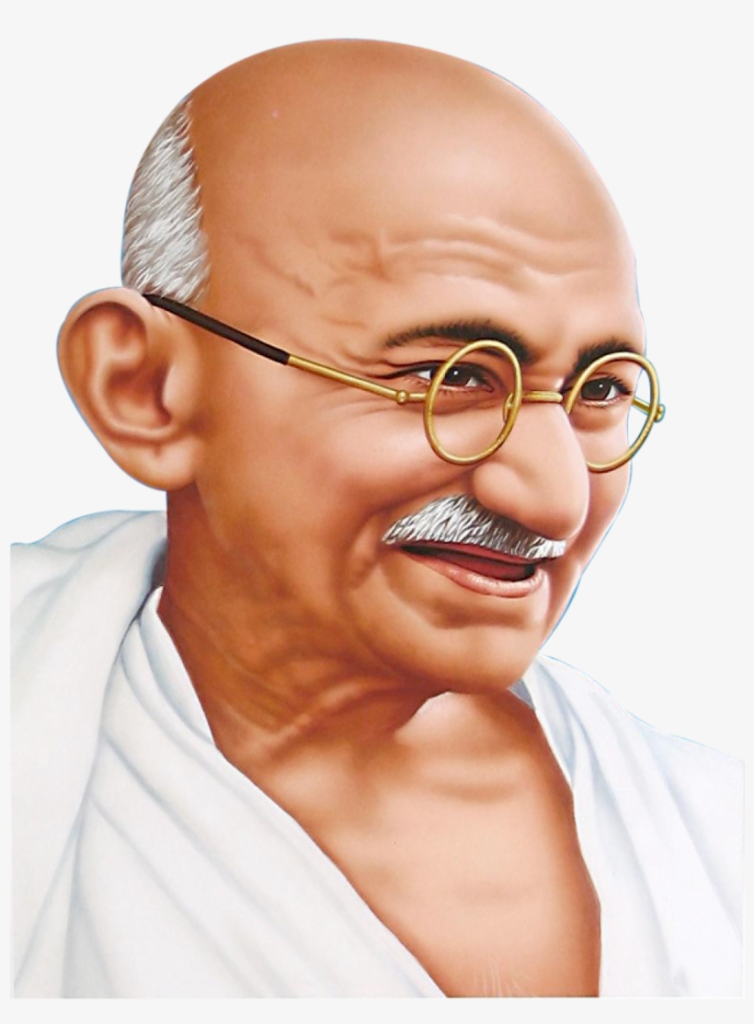
Mahatma Gandhi, an apostle of non-violence and preacher of truth, was born on October 2nd, 1869 in Gujarat. He belonged to a well-to-do family. Throughout his school days, he remained a shy boy but was a good and regular student. He later went to England to study law and became a barrister. Then he returned to India and began to practice at the Bombay High Court. But he was not very interested in the legal profession. So, he joined the struggle for India’s Independence.
Mahatma Gandhi was a man of sound and strong convictions. He had a noble soul. He wore very simple clothes and took simple vegetarian food. He was not only a man of words but also of action. He practiced what he preached. His approach to various problems was non-violent. He was a God-fearing person. He was the cynosure of all the eyes. He hated communalism in every shape or form. He was a friend of all and an enemy of none. He was universally loved and liked. That’s why Indian masses bestowed him with the title ‘Mahatma’.
The part played by Mahatma Gandhi on the stage of Indian politics is unforgettable. In those stormy days of the struggle for Indian Independence, Gandhi suffered and was imprisoned several times but freedom of his motherland remained his cherished goal. He guided many freedom struggles and launched the “Quit India Movement.”
Conclusion on Mahatma Gandhi Essay
His tragic death on January 30th, 1948, plunged the entire nation into the gloom. He was assassinated by a Hindu frantic. His death was the greatest blow to the forces of peace and democracy. The memorable words of Lord Mountbatten are worth quoting, “India, indeed the world, will not see the likes of him perhaps for centuries.” His death left a great vacuum in the life of the nation. His birthday 2nd October is commemorated as ‘Gandhi Jayanti’, a national holiday in Indian, and worldwide as the ‘International Day of Non-violence’.
The whole world still loves and respects this veteran of the twentieth century who has left an indelible mark on the sands of time.