The Importance of Idioms
You might be wondering why we choose to complicate things by using idioms at all. Wouldn’t it just be easier to say what we literally mean? Well, yes, it might be easier but it would also be a little boring. Using idioms is a way of expressing ourselves figuratively instead of literally. It’s a way to express meaning on a more relatable and deeper level. When we hear idioms or read idioms we are able to use our imagination more to really understand the meaning that the person is trying to get across to us. It’s almost like we understand their meaning even more.
Take the “Over the moon” example from earlier. The person could just say that they are “really happy” about whatever it is that is making them happy. But by using the idiom and expressing themselves figuratively, we understand what they mean and it carries with it a little more meaning than the literal version of what they are trying to say. Essentially, we can form an image in our mind of this person being so overjoyed that they could jump over the moon with happiness. If that isn’t more meaningful than someone saying “I’m really happy”, then we don’t know what is.
Idioms are important because they allow people to express themselves in a more open and creative way. It allows the speaker or the writer to get a point across to somebody in a way that might not always be clear initially, but in the context of what they are saying makes perfect sense. They can be really good as a short way of expressing a more complicated idea. “Over the moon” is much easier than saying “I’m really happy, I could jump for joy and land on the moon”. Most people know what “Over the moon” means anyway, so it communicates the meaning clearly and quickly.
Why Use Idioms in Everyday Conversations?
In short, because it would be difficult not to. We all know certain sayings or phrases from growing up, and that is exactly what an idiom is. Idioms can be universally understood, locally understood in your country/town/city/street, or even be understood just within your own family. Idioms are sewed into the fabric of the English language, wherever you’re speaking it. They are useful in everyday conversations because they get the meaning across without having to say very much at all. You save time, your meaning is clear in a figurative sense (even when it is not literally understood), and then you can move on to the next part of your conversation.
We use idioms in everyday conversations because they are phrases and sayings that are easily understood and quick to say. It makes sense to make use of this figurative way of conveying your message or getting your point across.
How and When to Use Idioms in Writing
Unfortunately, it isn’t always acceptable to use idioms in writing. If, for example, you are writing something that is going to be placed on the internet for a potential worldwide audience, idioms might become confusing. You have to understand that idioms might be unique to you in some sense, and that others might struggle to understand what you are saying. With idioms, context is everything. People who are learning English as a second language won’t be familiar with the quirky sayings and phrases that idioms represent, and sometimes even for people who have English as a first language might never have come across the particular idiom you are using. So, try to avoid idioms if you think your meaning might become unclear for your audience.
Idioms are also seen as quite an informal way of writing, so you should avoid using them for anything that needs to be formal in tone. Writing to a company that has just appointed you as their new Communications Manager for example, might not be the best time to tell them that you are “Over the moon” and that the task might be a “tall order” but you’re certain that you can “move the needle” and have everything ready “on the dot”. If those idioms confused you, don’t worry, they were supposed to… The point is, that meaning can get lost easily, and in formal or professional writing you should always aim to be as clear as possible.
That being said, if you are writing something that can be informal in tone and you know that the audience is going to understand your meaning because it’s commonly used in your local area or the meaning is easily deduced through context, then you absolutely should make use of idioms in writing! They are an excellent way of communicating an idea, and they will mean more to an individual who understands it than if you simply said everything literally.
Idioms are a very useful thing to understand in day to day life, and using them yourself now that you better understand them could save you time, express your meaning more clearly, and help people feel more connected to what you are saying or writing!
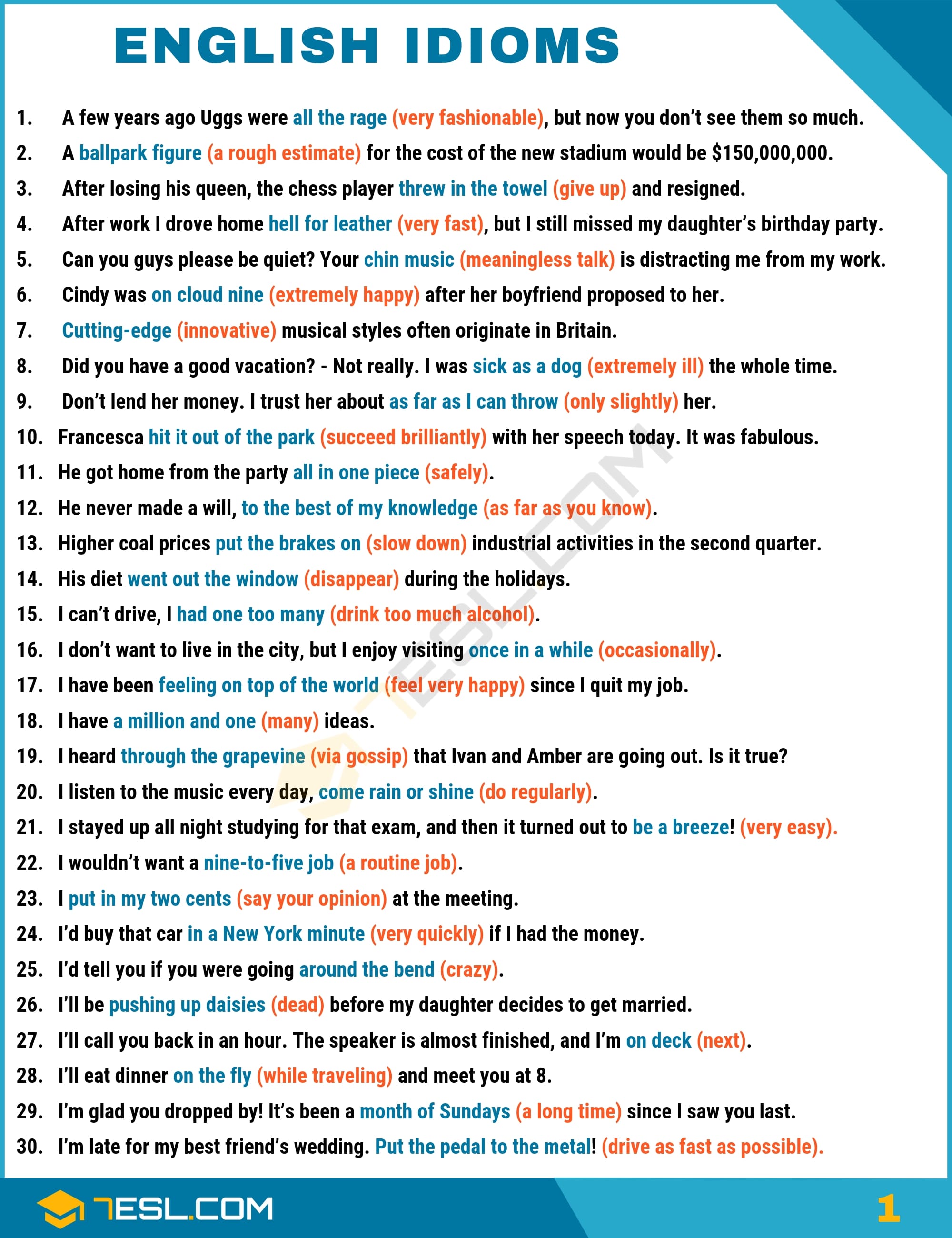
Examples of common idioms used in sentences