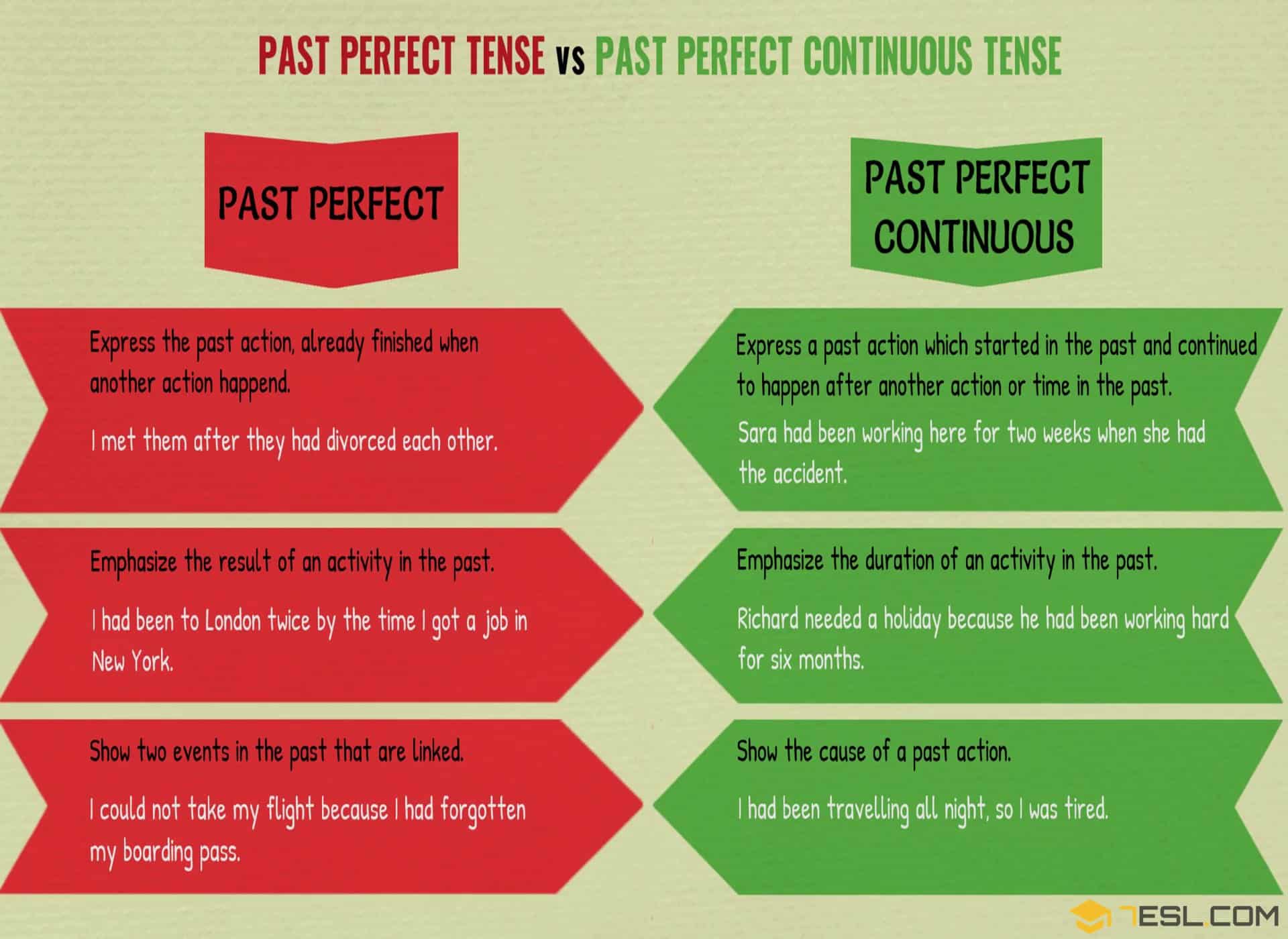
Past Perfect and Past Perfect Continuous Differences in Form
- Past Perfect Tense:
We form the Past Perfect with had and the past participle:
Had + Past Participle
- Past Perfect Continuous Tense:
We form the Past Perfect Continuous with had been and the -ing form of the verb:
Had been + V-ing
Past Perfect vs Past Perfect Continuous Differences in Usage
- The past perfect tense expresses a past action, already finished when another past action happened; the past perfect continuous tense describes a past action which started in the past and continued to happen after another action or time in the past.
Examples:
I met them after they had divorced. (past perfect)
Sara had been working here for two weeks when she had the accident. (past perfect continuous)
- The past perfect tense emphasizes the result of an activity in the past; In contrast, the past perfect continuous tense emphasizes the duration of an activity in the past.
Examples:
I had been to London twice by the time I got a job in New York. (past perfect)
Richard needed a holiday because he had been working hard for six months. (past perfect continuous)
- The past perfect tense shows two events in the past that are linked, while the past perfect continuous tense shows the cause of a past action.
Example:
I couldn’t take my flight because I had forgotten my boarding pass. (past perfect)
I had been travelling all night, so I was tired. (past perfect continuous)
Difference between Past Perfect and Past Perfect Continuous | Picture